AI-ondersteunde klinische verslaglegging: de notitie is klaar als de patiënt vertrekt, elke zin herleidbaar
Notat haalt eerst de klinische feiten uit het gesprek en schrijft de notitie alleen op basis daarvan. Elke zin verwijst terug naar wat er gezegd is, zodat u het concept controleert in plaats van het opnieuw te typen.
“Ik rond dossiers niet meer om negen uur savonds af. De notitie ligt klaar zodra de patiënt weggaat, en ik hoef hem alleen nog na te lopen.” Dr. Marta Estrada, Huisartsgeneeskunde, Barcelona
Verwerkt en opgeslagen in de EER
Audio wordt nooit opgeslagen
Versleuteld tijdens transport en opslag
Notities na 24 uur automatisch verwijderd
Nooit gebruikt om modellen te trainen
2,000+ clinici
- Beveiligingsdetails →
In realtime gesynchroniseerd
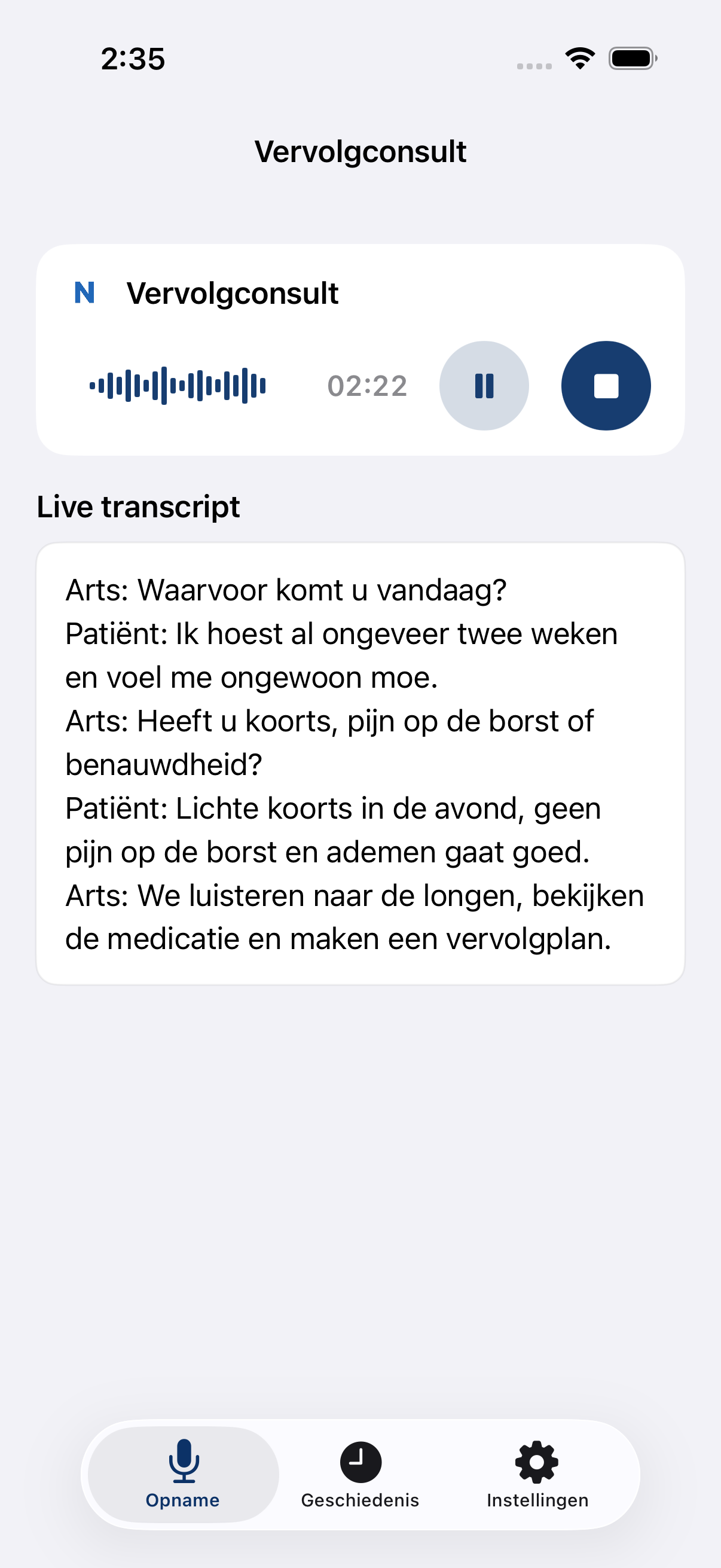
Neem op met je telefoon of je desktop — Notat houdt alle apparaten in realtime gesynchroniseerd. Elke notitie, codesuggestie en vervolgplan wordt live gegenereerd vanuit FactsContext™, de gestructureerde klinische feiten achter alles wat Notat schrijft.
Bekijk hoe FactsContext™ werktLive-extractie actief.
Waarom clinici voor Notat kiezen
FactsContext™ scheidt begrip van schrijven. Die scheiding is wat de documentatie betrouwbaar maakt — en wat elke downstream-mogelijkheid mogelijk maakt.
De feiten zijn van jou
Notat toont je de ruwe geëxtraheerde medische feiten van elk consult — niet alleen de gepolijste notitie. Inspecteer ze, verifieer de notitie eraan, of hergebruik ze zoals jij wilt.
Elke zin is herleidbaar
Omdat documentatie wordt gegenereerd uit gestructureerde feiten, is elke uitspraak in de notitie herleidbaar naar iets dat daadwerkelijk tijdens het consult is gebeurd.
Niets verzonnen
Transcript-directe AI vult hiaten op met plausibel klinkende tekst. FactsContext™ is ontworpen om niet-ondersteunde uitspraken te verminderen door alleen te schrijven op basis van geverifieerde klinische feiten.
Notes you can trust
Every drafted note is tied to the evidence in the transcript. Nothing is invented, and you review before it counts.
Less after-hours charting
Clinicians on Notat spend their evenings somewhere other than the EHR. The note is mostly done when the visit ends.
Coding that is reviewable
ICD-10 suggestions come with the clinical reasoning behind them, so a clinician or coder can confirm in seconds rather than dig.
Works where you work
Drafts push into the EHR and systems your clinic already uses. Notat fits the workflow instead of forcing a new one.
Het gratis abonnement bevat 10 notities per maand.
Bekijk uw feiten — probeer gratis →Bekijk volledige prijzen →Vier stappen naar de afgeronde notitie
1
Start the visit
Open Notat on the web or the iOS app and begin. No templates to configure, no voice commands to memorize.
2
Have the conversation
Talk with your patient as usual. Notat transcribes and extracts the clinically relevant facts in real time.
3
Review the note
A structured draft is ready when you stop. Read it, edit it, and check the suggested codes against the evidence.
4
Send it on
Push the finished note to your EHR or export it. The visit is documented before the next one starts.
Hoe clinici Notat gebruiken
During the visit. Notat listens in the background. Keep your attention on the patient instead of a screen, and the conversation is captured as it happens.
After the visit. A structured note is ready in seconds, organized the way your specialty expects. Edit anything, then sign off and move on.
Across the day. Stop carrying documentation home. Visits that used to mean an hour of typing now close before the next patient walks in.
Across languages. Patients speak in their own language and the note comes out in yours. Notat handles 14 languages without losing clinical detail.
Veelgestelde vragen
What is an AI medical scribe?
An AI medical scribe listens to the patient consultation and drafts a structured clinical note from it, so the clinician reviews a finished draft instead of typing one from scratch. Notat ties every part of the draft to the evidence in the transcript.
What is the difference between an AI scribe, dictation, and transcription?
Medical transcription turns recorded speech into text, and medical dictation turns a clinician's spoken instructions into a note. An ambient AI medical scribe listens to the consultation and drafts a structured clinical note from the visit for the clinician to review and sign.
Is the AI note ready to sign without editing?
No. The note is a draft for the clinician to review and edit. Notat never invents content, and every suggested code is checked against the documented encounter before it is used.
Does it work in my language?
Notat supports 14 languages. Patients can speak in their own language and the note is drafted in the language the clinician works in, without losing clinical detail.
Does it suggest ICD-10 codes?
Yes. Notat suggests ICD-10 codes supported by the documented facts, each with its clinical reasoning, so a clinician or coder can confirm quickly rather than search from scratch.
How much does Notat cost?
The Free plan includes 10 notes per month. Paid plans for higher volume and clinic features are listed on the pricing page.
How is patient data protected?
Notat processes and stores data in the European Economic Area under GDPR. Audio is handled in short chunks and each chunk is deleted after processing, so a full recording is never stored. Data is encrypted in transit and at rest, notes are deleted automatically after 24 hours, and clinical inputs are not used to train models. For a data processing agreement, contact [email protected].
Where is my data stored?
All processing and storage take place within the European Economic Area (EEA). Your data does not leave the EEA.
How do I get the note into my EHR?
You can copy or export the finished note into any EHR. Notat does not replace your record system; it gives you a note ready for your review to put into it. Direct EHR connections are enabled for selected accounts, so ask us on the contact page if you need one.
How accurate is the note?
Notat extracts the clinical facts from the conversation first and writes the note only from those facts. Each sentence can be traced back to what was said, and you review and edit the note before signing. As with any AI draft, your review is the final safeguard.
Wat AI-ondersteunde klinische verslaglegging doet
AI-ondersteunde klinische verslaglegging maakt van het gesprek tussen zorgverlener en patiënt een concept van het klinische verslag. Ambient verslaglegging werkt op de achtergrond, zonder dat de zorgverlener tijdens het consult hoeft te typen of te dicteren.
Medische transcriptie
Zet opgenomen spraak of dicteren om in tekst.
Medisch dicteren
Zet de gesproken instructies van de zorgverlener om in een gestructureerde notitie.
Klinische verslaglegging op de achtergrond
Luistert naar het consult en maakt daaruit een conceptverslag.
Zo werkt Notat
Klinische feiten worden eerst geëxtraheerd. Daarna wordt het verslag geschreven en gecontroleerd door de zorgverlener vóór ondertekening.
Een AI-schrijver kiezen en vertrouwen
Try the visit without the paperwork
Notat drafts the note from the conversation so you can spend the visit with your patient, not your keyboard. Start a free trial in about ten minutes.