KI-gestützte medizinische Dokumentation: die Notiz ist fertig, wenn der Patient geht, jeder Satz nachvollziehbar
Notat extrahiert zuerst die klinischen Fakten aus dem Gespräch und schreibt die Notiz nur aus diesen Fakten. Jeder Satz verweist auf das Gesagte zurück, sodass Sie den Entwurf prüfen, statt ihn neu zu tippen.
“Ich schließe meine Akten nicht mehr abends um neun ab. Die Notiz liegt vor, wenn der Patient geht, und ich muss sie nur noch prüfen.” Dr. Marta Estrada, Allgemeinmedizin, Barcelona
Verarbeitung und Speicherung im EWR
Audio wird nie gespeichert
Verschlüsselt bei Übertragung und Speicherung
Notizen nach 24 Std. automatisch gelöscht
Nie zum Training von Modellen verwendet
2,000+ Ärztinnen und Ärzte
- Sicherheitsdetails →
In Echtzeit synchronisiert
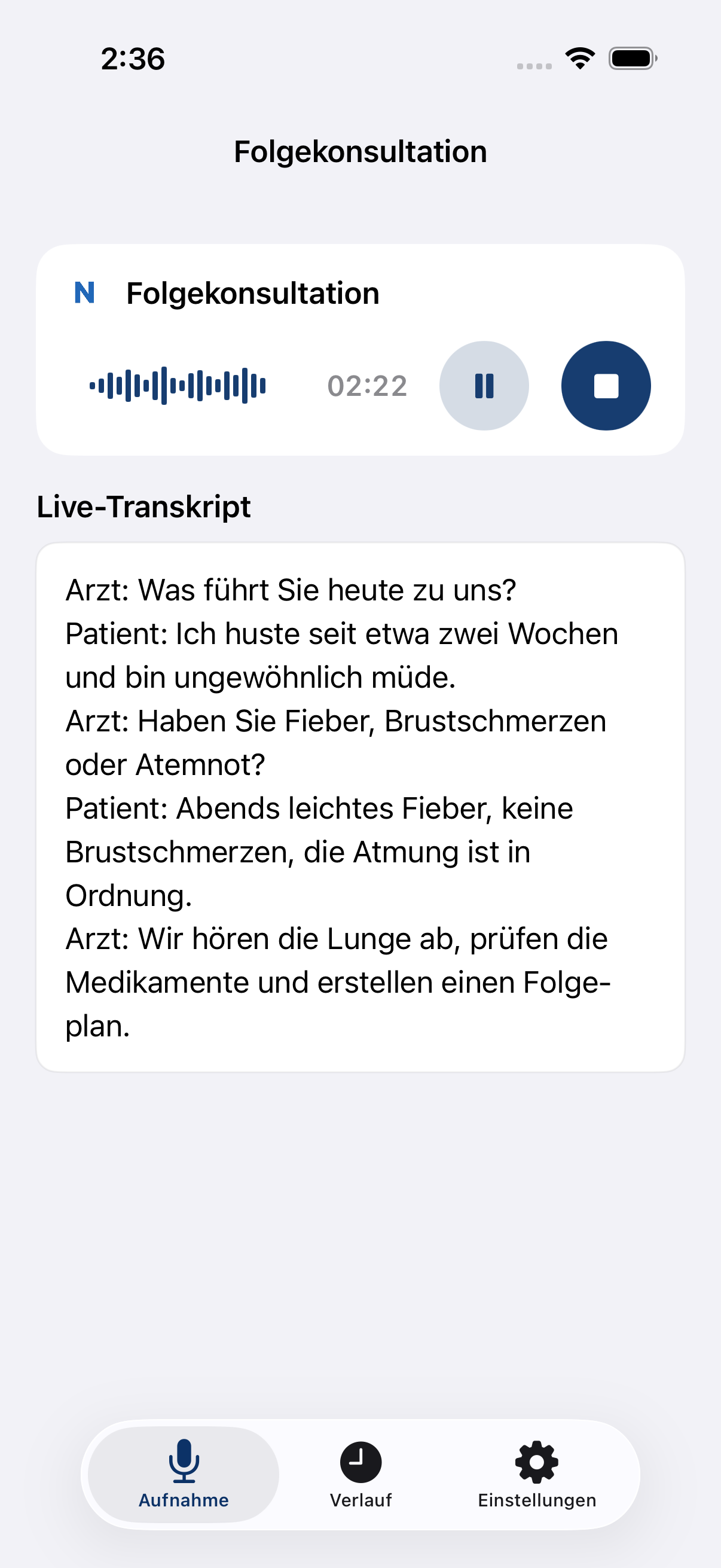
Nehmen Sie auf Ihrem Smartphone oder Desktop auf – Notat hält alle Geräte in Echtzeit synchron. Jede Notiz, jeder Kodierungsvorschlag und jeder Nachsorgeplan wird live aus FactsContext™ generiert, den strukturierten klinischen Fakten hinter allem, was Notat schreibt.
So funktioniert FactsContext™Live-Extraktion aktiv.
Warum Ärztinnen und Ärzte Notat wählen
FactsContext™ trennt Verständnis von Schreiben. Diese Trennung macht die Dokumentation vertrauenswürdig — und macht jede nachgelagerte Funktion möglich.
Die Fakten gehören Ihnen
Notat zeigt Ihnen die roh extrahierten medizinischen Fakten aus jedem Behandlungsgespräch — nicht nur die polierte Notiz. Prüfen Sie sie, verifizieren Sie die Notiz anhand dieser Fakten oder verwenden Sie sie nach Belieben wieder.
Jeder Satz ist nachvollziehbar
Da die Dokumentation aus strukturierten Fakten generiert wird, lässt sich jede Aussage in der Notiz auf etwas zurückführen, das tatsächlich im Behandlungsgespräch geschehen ist.
Nichts erfunden
Transkript-direkte KI füllt Lücken mit plausibel klingendem Text. FactsContext™ ist darauf ausgelegt, nicht belegte Aussagen zu reduzieren, indem es ausschließlich aus verifizierten klinischen Fakten schreibt.
Notes you can trust
Every drafted note is tied to the evidence in the transcript. Nothing is invented, and you review before it counts.
Less after-hours charting
Clinicians on Notat spend their evenings somewhere other than the EHR. The note is mostly done when the visit ends.
Coding that is reviewable
ICD-10 suggestions come with the clinical reasoning behind them, so a clinician or coder can confirm in seconds rather than dig.
Works where you work
Drafts push into the EHR and systems your clinic already uses. Notat fits the workflow instead of forcing a new one.
Der kostenlose Tarif enthält 10 Notizen pro Monat.
Sehen Sie Ihre Fakten — kostenlos testen →Vollständige Preise anzeigen →Vier Schritte zur fertigen Notiz
1
Start the visit
Open Notat on the web or the iOS app and begin. No templates to configure, no voice commands to memorize.
2
Have the conversation
Talk with your patient as usual. Notat transcribes and extracts the clinically relevant facts in real time.
3
Review the note
A structured draft is ready when you stop. Read it, edit it, and check the suggested codes against the evidence.
4
Send it on
Push the finished note to your EHR or export it. The visit is documented before the next one starts.
Wie Ärztinnen und Ärzte Notat nutzen
During the visit. Notat listens in the background. Keep your attention on the patient instead of a screen, and the conversation is captured as it happens.
After the visit. A structured note is ready in seconds, organized the way your specialty expects. Edit anything, then sign off and move on.
Across the day. Stop carrying documentation home. Visits that used to mean an hour of typing now close before the next patient walks in.
Across languages. Patients speak in their own language and the note comes out in yours. Notat handles 14 languages without losing clinical detail.
Häufige Fragen
What is an AI medical scribe?
An AI medical scribe listens to the patient consultation and drafts a structured clinical note from it, so the clinician reviews a finished draft instead of typing one from scratch. Notat ties every part of the draft to the evidence in the transcript.
What is the difference between an AI scribe, dictation, and transcription?
Medical transcription turns recorded speech into text, and medical dictation turns a clinician's spoken instructions into a note. An ambient AI medical scribe listens to the consultation and drafts a structured clinical note from the visit for the clinician to review and sign.
Is the AI note ready to sign without editing?
No. The note is a draft for the clinician to review and edit. Notat never invents content, and every suggested code is checked against the documented encounter before it is used.
Does it work in my language?
Notat supports 14 languages. Patients can speak in their own language and the note is drafted in the language the clinician works in, without losing clinical detail.
Does it suggest ICD-10 codes?
Yes. Notat suggests ICD-10 codes supported by the documented facts, each with its clinical reasoning, so a clinician or coder can confirm quickly rather than search from scratch.
How much does Notat cost?
The Free plan includes 10 notes per month. Paid plans for higher volume and clinic features are listed on the pricing page.
How is patient data protected?
Notat processes and stores data in the European Economic Area under GDPR. Audio is handled in short chunks and each chunk is deleted after processing, so a full recording is never stored. Data is encrypted in transit and at rest, notes are deleted automatically after 24 hours, and clinical inputs are not used to train models. For a data processing agreement, contact [email protected].
Where is my data stored?
All processing and storage take place within the European Economic Area (EEA). Your data does not leave the EEA.
How do I get the note into my EHR?
You can copy or export the finished note into any EHR. Notat does not replace your record system; it gives you a note ready for your review to put into it. Direct EHR connections are enabled for selected accounts, so ask us on the contact page if you need one.
How accurate is the note?
Notat extracts the clinical facts from the conversation first and writes the note only from those facts. Each sentence can be traced back to what was said, and you review and edit the note before signing. As with any AI draft, your review is the final safeguard.
Was KI-Dokumentation für Ärzte leistet
KI-Dokumentation macht aus dem Gespräch zwischen Arzt und Patient einen Entwurf für die klinische Dokumentation. Ambient-Dokumentation läuft im Hintergrund, ohne dass der Arzt während des Gesprächs diktieren oder tippen muss.
Medizinische Transkription
Wandelt eine Aufnahme oder ein Diktat in Text um.
Medizinisches Diktat
Wandelt die gesprochenen Anweisungen des Arztes in eine strukturierte Notiz um.
Ambient KI-Dokumentation
Hört dem Gespräch zu und erstellt daraus einen Entwurf für die Patientenakte.
So arbeitet Notat
Klinische Fakten werden zuerst extrahiert. Daraus entsteht der Entwurf, den der Arzt vor der Signatur prüft.
Eine KI-Dokumentationslösung auswählen und ihr vertrauen
Try the visit without the paperwork
Notat drafts the note from the conversation so you can spend the visit with your patient, not your keyboard. Start a free trial in about ten minutes.